I entered my first Italian rotary the way I entered seminary: underprepared and praying out loud.
A Fiat Panda came at me from the left. Then three or four scooters, one with a man smoking and a woman behind him balancing a cake box on her knee. A delivery van followed, pressing its way in the middle. I gripped the wheel, inched forward, and the whole thing opened up just enough for me to squeeze through and pop out the far side. Success! and shaking.
Italian drivers are a little nuts. I say this as someone who loves driving in Boston and believes herself to be a London taxi driver in previous life. Yet the rotary works. Everybody keeps rolling, reads the car beside them, adjusts, and then the whole mess takes pity on this American and waves her through. (Unless I’m misreading those local gesticulations?)
* * * * * * * * * * * * *
When the Navy offered me Naples, I said yes because I wanted to learn from a culture with riposo.
Riposo is an extended midday break, 1:30-4:00PM in most regions. Shutters roll down, shops close up, and whole families go home to eat a real lunch and lie down. After this literal rest, towns comes back like it just remembered an appointment. I have eaten way too many lunches over a keyboard, so a whole nation agreeing to stop at the same hour seems like that balm in Gilead we hear about that makes the wounded whole.
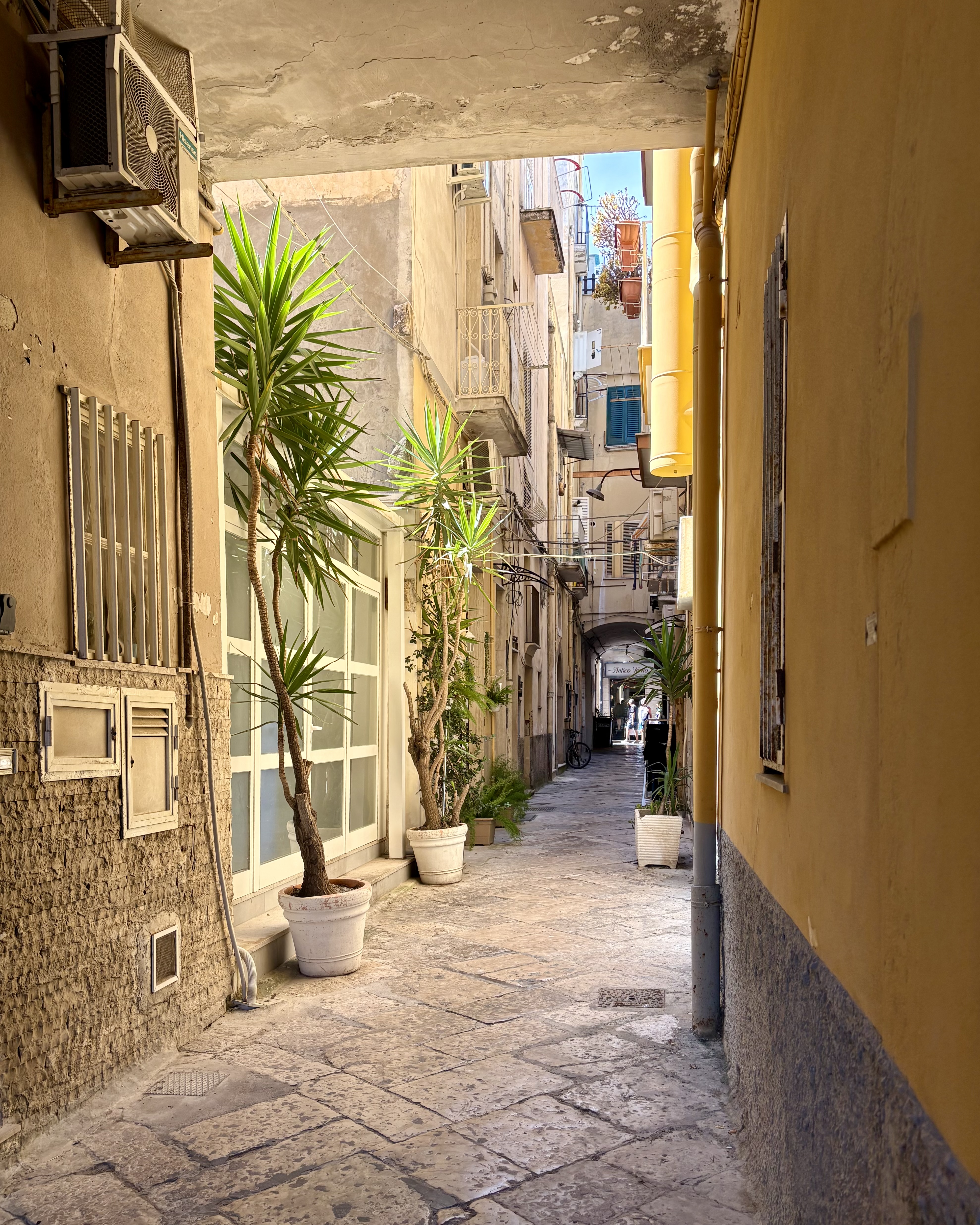
Streets are in on this healing process too. Cobblestones make you walk at cobblestone speed. You look down to stay upright, then you look up and see laundry crisscrossing the alley with a grandmother on the balcony supervising the drying process, then looking forward you see the same old man with the same newspaper in the same doorway every morning.
Dinner comes in installments. I am full after the antipasto every single time. Then the pasta arrives. Then the fish. I have yet to learn how to pace myself. (Eating in Italy deserves its own blog series. For now, file it under slowing down as a way of life.)
* * * * * * * * * * * * *
A few weeks ago, my spouse, children, and I joined six other military families for a family enrichment retreat in Gaeta, a fortified old port about an hour or so up the coast.
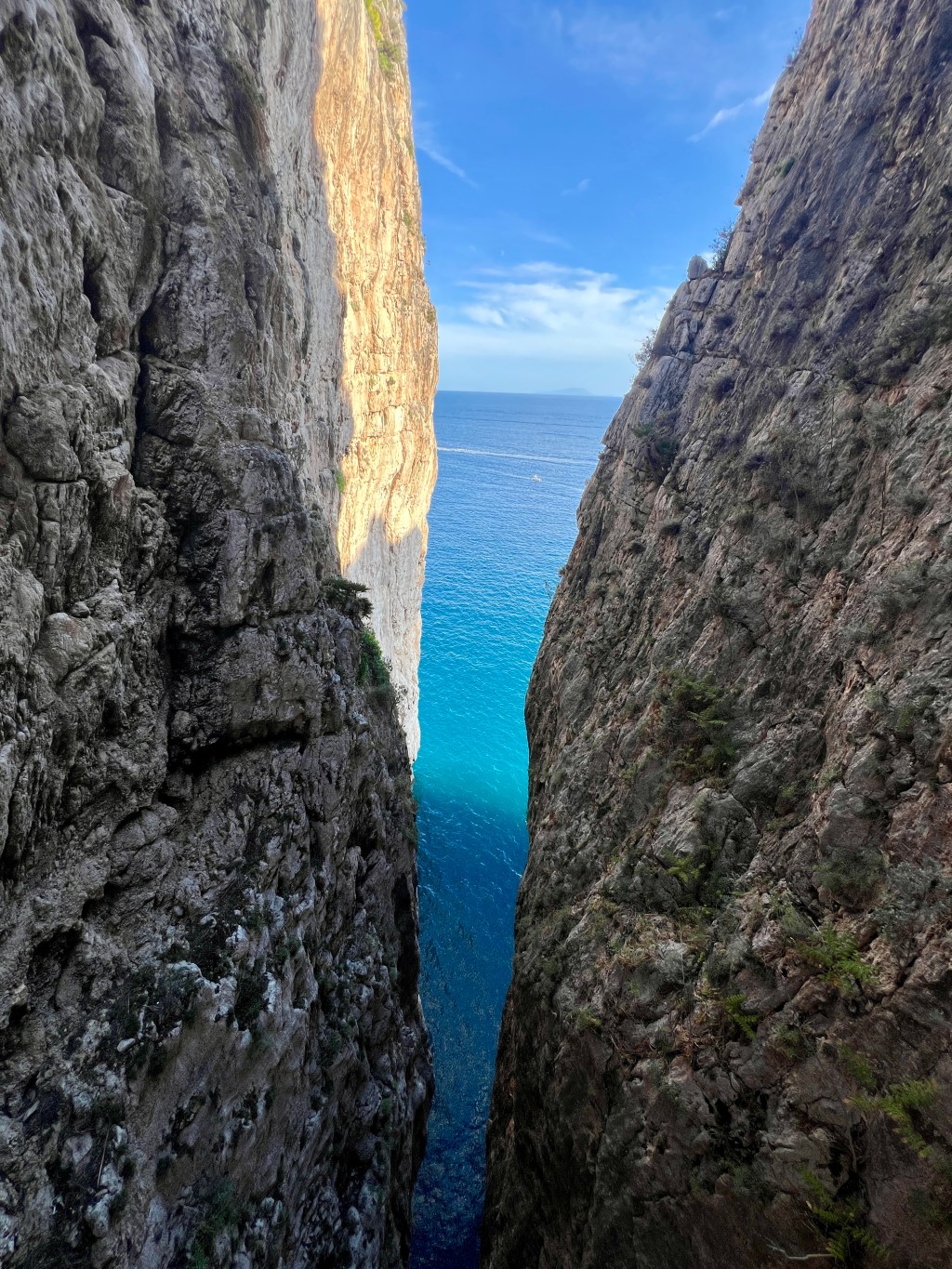
During our break Saturday afternoon, we drove up to the Trinità di Gaeta, a sanctuary built into the side of Monte Orlando. The legend is that the mountain split in two at the hour Jesus died. There is a stairway down into the crack, rock going straight up on both sides, and a strip of turquoise sea a very long way down. My spouse and the boys leaned over the rail, while I studied the chapel dome. Some wonders I take on faith, and by faith, I mean that I experienced the site’s magnificence through the photo they took on the iPhone.
Dinner that night lasted two hours, which is an hour and a half past our house record (Thanksgiving and Christmas excluded). The boys stayed the whole time. Cell phones were nowhere to be seen. Every so often they joined the grown-up conversation with an opinion, and the grown-ups listened. By second course, my heart was swelling. This is what meals were like at my family reunions and holiday dinners of my childhood. These are among my most treasured early moments and memories, where a whole crowd of children and grown-ups crammed around one table. (The good stories were told at the big table.)
* * * * * * * * * * * * *
After the evening session, we walked into the old town and found all of Gaeta out on the streets.
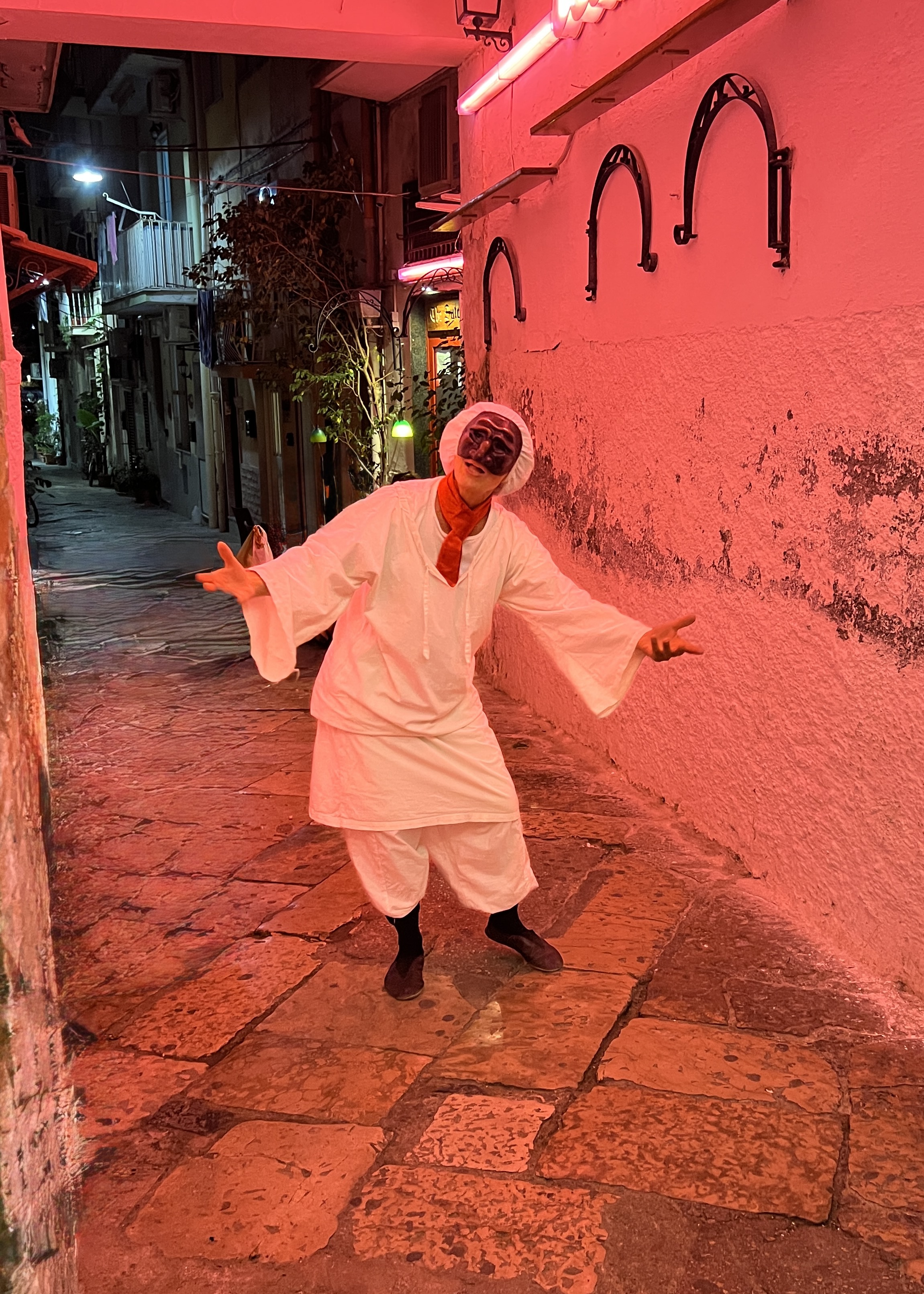
on Via Indipendenza.
Every weekend in September, Via Indipendenza turns into a street festival, and that Saturday it was going full tilt. A juggler on one corner and a band on the next. A small dance troop had taken oven an alleyway off the via, occasionally spilling into the walkway stopping the flow of pedestrians with their routine. Strollers everywhere. Grandparents parked on folding chairs. Teenagers worked hard at looking bored. Under a pink neon sign a woman dressed as Pulcinella, the Neapolitan clown from the old commedia dell’arte, white smock and black half-mask, struck poses and recited poetry, arms flung wide. My limited Italian proved her disappointment that we were not the crowd she had been waiting for all night.
Around the corner, in a little piazza the alley dancers eventually took over, painted quotations about Gaeta on ceramic tiles hung on the walls. One from Don Quixote talks about Sancho Panza sending his master off with a thousand signs of the cross and a blessing that calls on the Trinità di Gaeta, the same split mountain I admired earlier that afternoon from a safe distance.
* * * * * * * * * * * * *
We drove home Sunday during riposo, shutters down, the whole country napping, my family also asleep in the car just after we cleared Gaeta. I hummed Man of La Mancha’s “The Impossible Dream” all the way home. Dio ti faccia la strada, God make the road for you. Sancho meant it for a knight on a horse. I took it for our Toyota Yaris.
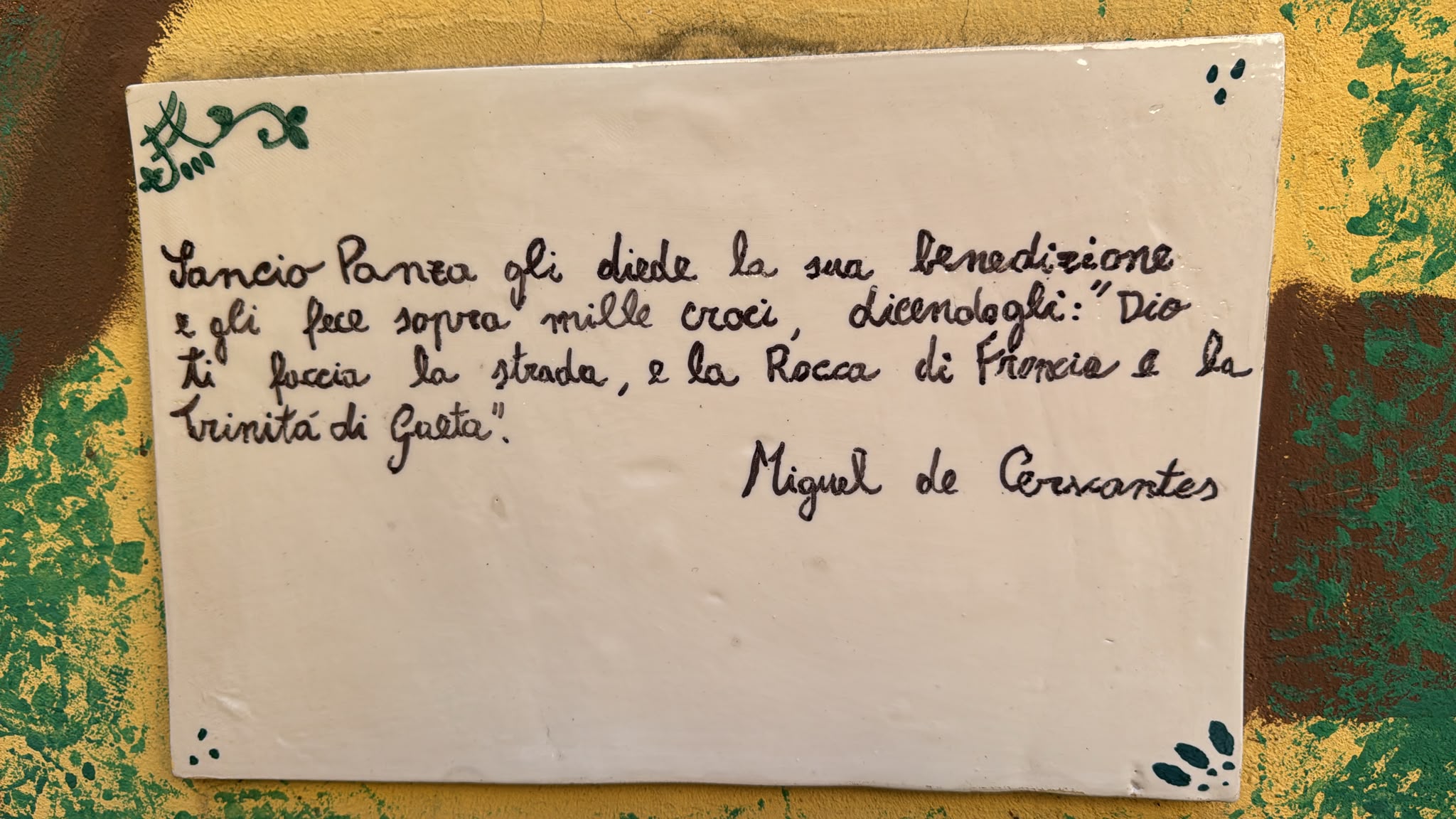
made a thousand signs of the cross over him, saying,
‘God make the road for you, and
[may] the Rocca di Fumone and the Trinity of Gaeta [go with you].’”
– Miguel de Cervantes


Leave a Reply