Returning Home to Find What Was Missing
I helped my best friend choose her burial plot last week and cried before we ever left the house.
She had asked me, prior to my trip back to the States for work, if we might visit the cemetery she had been thinking about. She is twenty years older than I am, an age gap by which I have been unphased for most of our decades-long friendship, and she is being practical about these things. We talked it through at her dinner table the night I arrived. Somewhere between the entree and dessert, the twenty years caught up with me.
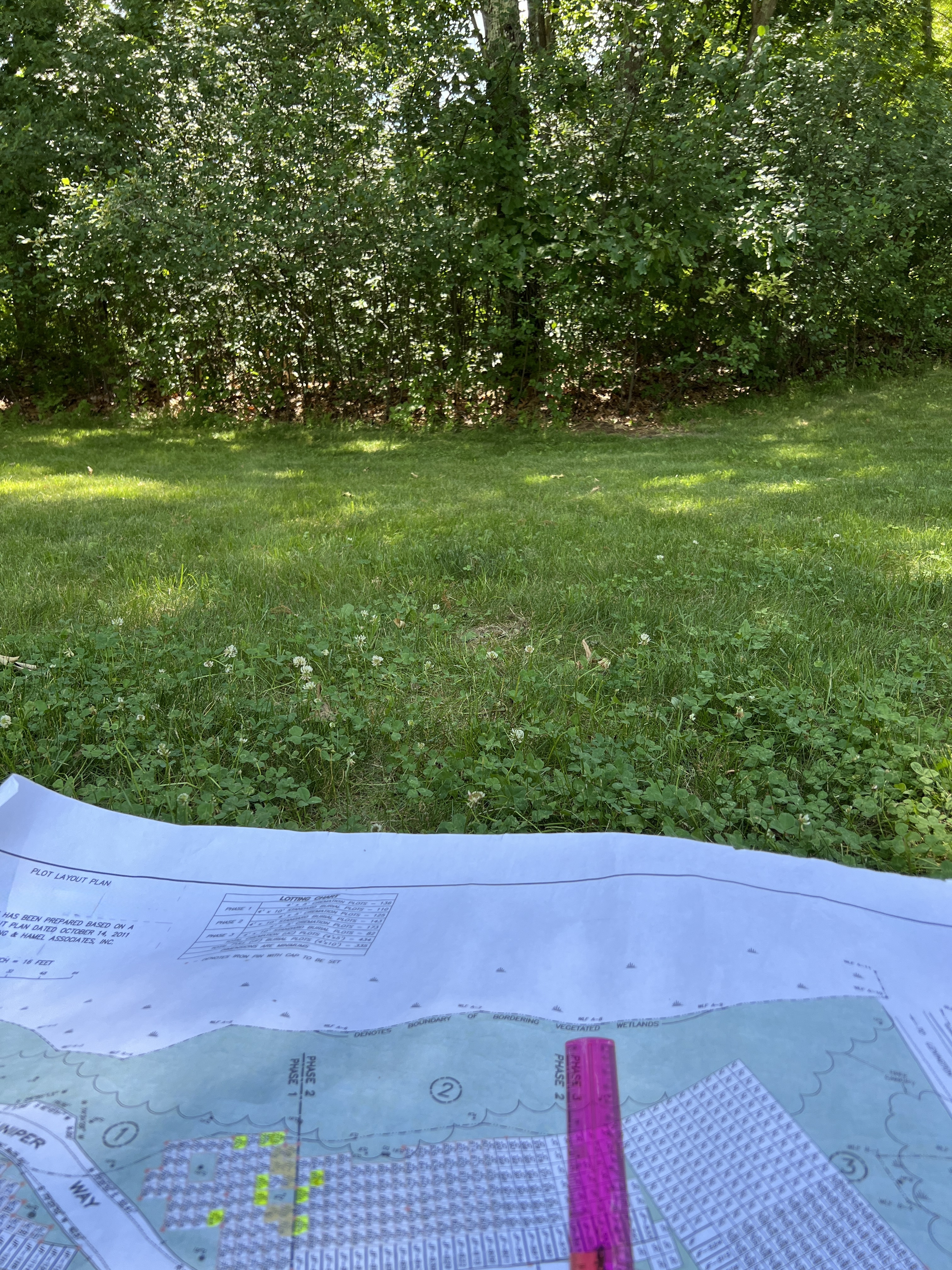
The cemetery she chose is in her new hometown, surrounded by conservation land, the kind of old New England burying ground where American and British soldiers from the Revolutionary War have been side by side for two and a half centuries.
She stood on the spot she had picked and looked out at her view. I stood a few feet behind her, facing the other way, at the patch of grass where her marker would go. She was looking at what she would not see. I was looking at what I would, though I could not look at the rest of my life without her in it.
* * * * * * * * * * * * *
Walden Pond eluded me for thirty-seven years.
I moved to the Boston area for graduate school in 1989 and my first parish internship was in Concord, Massachusetts. My best friend lives three miles from the pond, six minutes by car. I drove past the brown state park signs probably a thousand times. Every time, I told myself, “next time.” Last Sunday was next time, and my church that week.
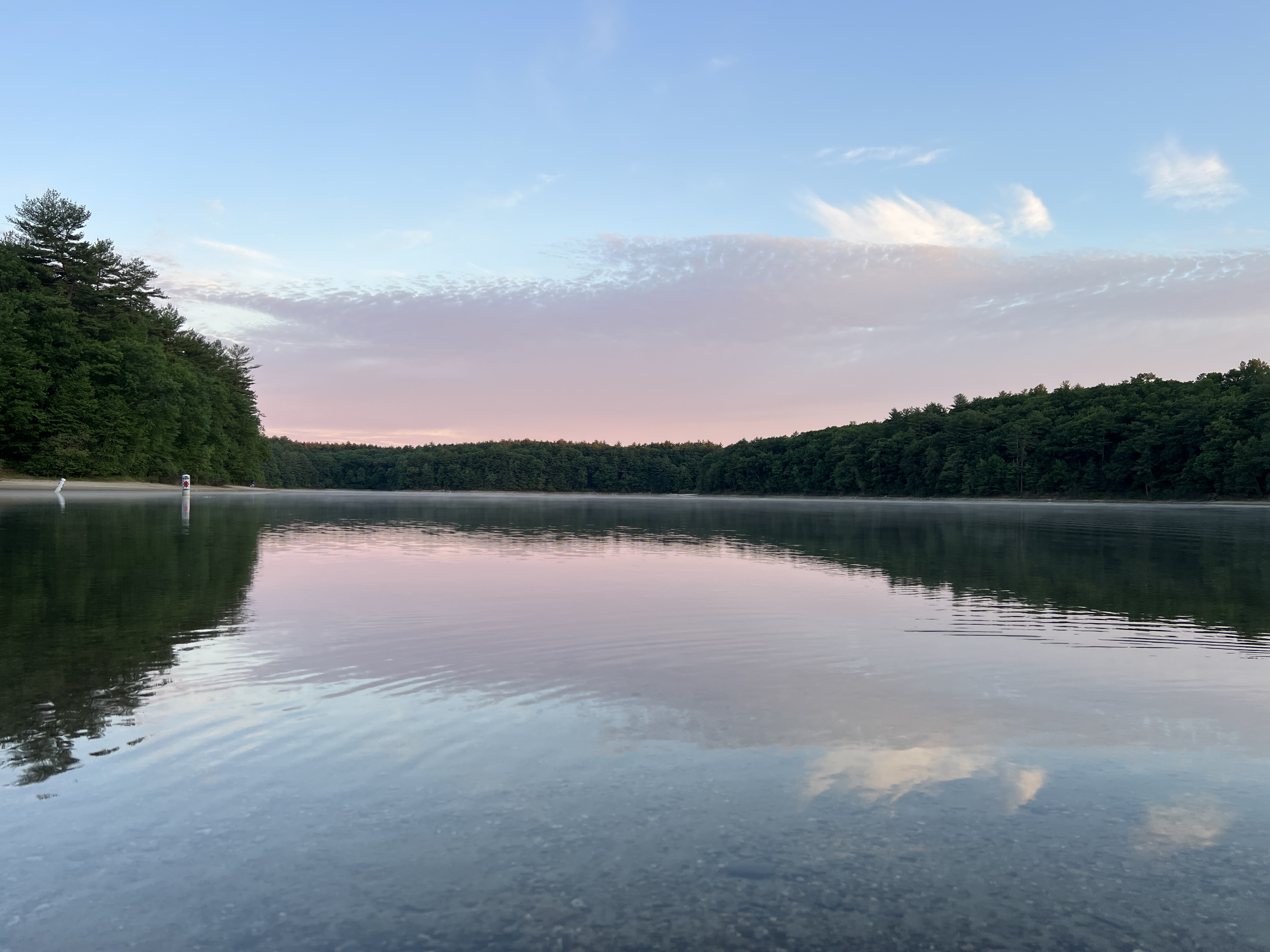
I returned to Walden every morning of my visit. The water before dawn was almost black. A thin mist sat on top of it, and the eastern sky was just beginning to turn—lavender first, then pink, then gold. One angler casting at the far end. A blue heron standing motionless in the shallows. A small turtle burrowed against the embankment, smaller than the one in our villa’s fountain pond, whom I wrote about a few months ago. The trail was mine.
The trees went on past the eye. Which is what I have been missing. (That and free refills.) Italy is beautiful, but everything has been shaped by hand for so long that there is nowhere within reach of daily life that is genuinely wild. I have been feeling that absence in my bones for months without quite knowing what it was.
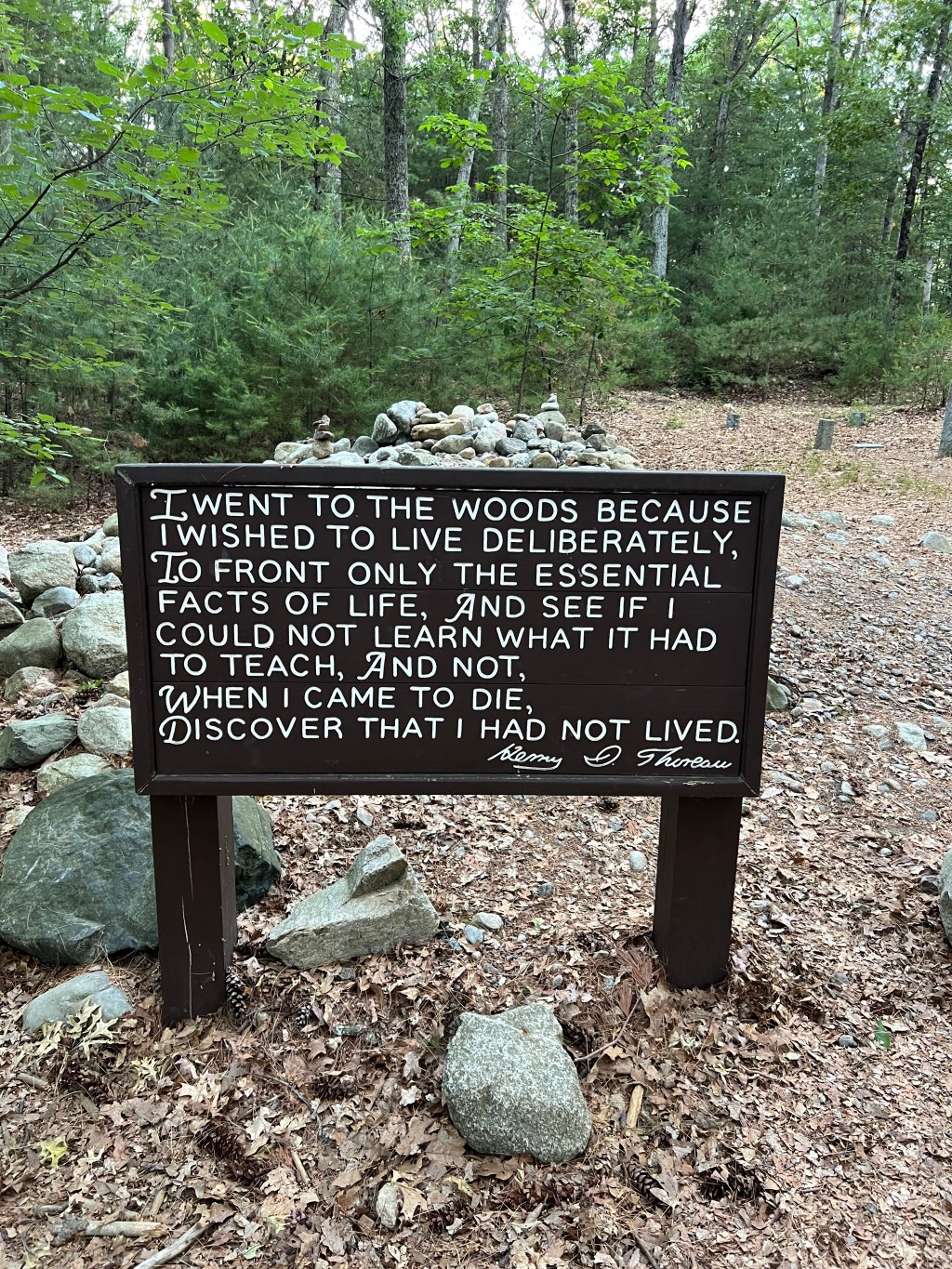
Henry David Thoreau went to Walden Pond in 1845 to learn what the woods had to teach him, so that when he came to die he would not discover that he had not lived. The book he wrote, Walden: Life in the Woods, is uneven. (The long ledger of what he spent on lumber and nails, board by board, bored me to tears in seminary and still does.) Though it is some of the most attentive writing about the everyday sacred I have ever read.
Transcendentalism was a young America’s answer to a question Europeans had been asking for centuries: where does God live? Their answer was in nature. The pond, the heron, the unhurried looking. These ideas are among the things that made the US great.
Walden and its woods gave me back the silence. The turtle and the sky turning over was a kind of stillness I had been missing for months. It did not, however, give me a way to talk about the idea of a life without my best friend.
* * * * * * * * * * * * *
I had dinner one night with a divinity school classmate, the other godmother to my boys, who is one of the wittiest people and fieriest minds I know. She is a ministerial colleague, writes two blogs, and is finally working on a book she has been promising the world for years. (Lucky world!) A few months ago, she paid me a compliment about my blog. I will carry that around forever.
Another afternoon, I lunched with another friend and longtime colleague, the best active listener I know, whose passion and energy are contagious within the first three minutes. She companioned me through a prickly breakup decades ago, and I have been trying to emulate her attentiveness ever since. We ate Indian food in a converted Pizza Hut, the dome roof and the booths still intact, and talked for two hours straight. The friendship, not the food, was worth the drive.
There are some things only the wild can show us, and some things only old friends can.
* * * * * * * * * * * * *
I experienced the country on the periphery, too, in the moments between the moments for which I had returned to the US.
Scotland’s first World Cup match was on the lobby TV when I checked into my hotel, and for the rest of the week the Tartan Army was everywhere, putting their traffic cones on the heads of the city’s founding statues. Then there was the fanfare around the Obama Center opening in Chicago the day I had a layover at O’Hare on my way back to Italy.
Three of my homes in one week. The first two are still where the people I love most (apart from my family) live. They are the reason I will keep going back.
Thoreau wrote that he silently smiled at his incessant good fortune. I have been silently smiling as well. My best friend, the godmothers, the listeners, the wild, the Tartan Army, and the country that took the question of God on a walk outdoors.
I do not know how to live the rest of a life that has my best friend’s burial plot already in it. I do know remembering the woods is where I can think about it.
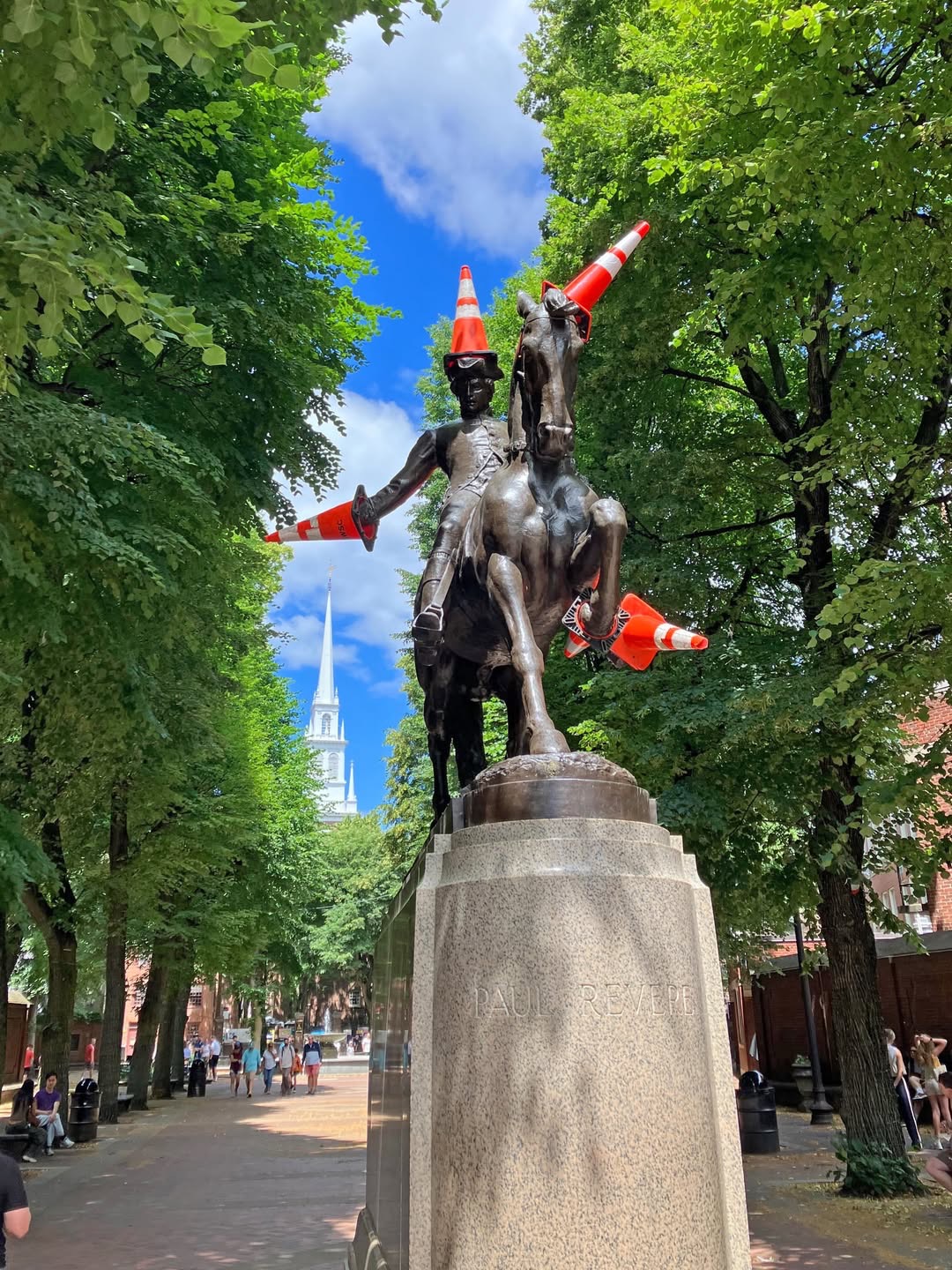
courtesy of the Tartan Army.
 Captain Reverend Mother
Leave a comment