England, History, and Holy Week
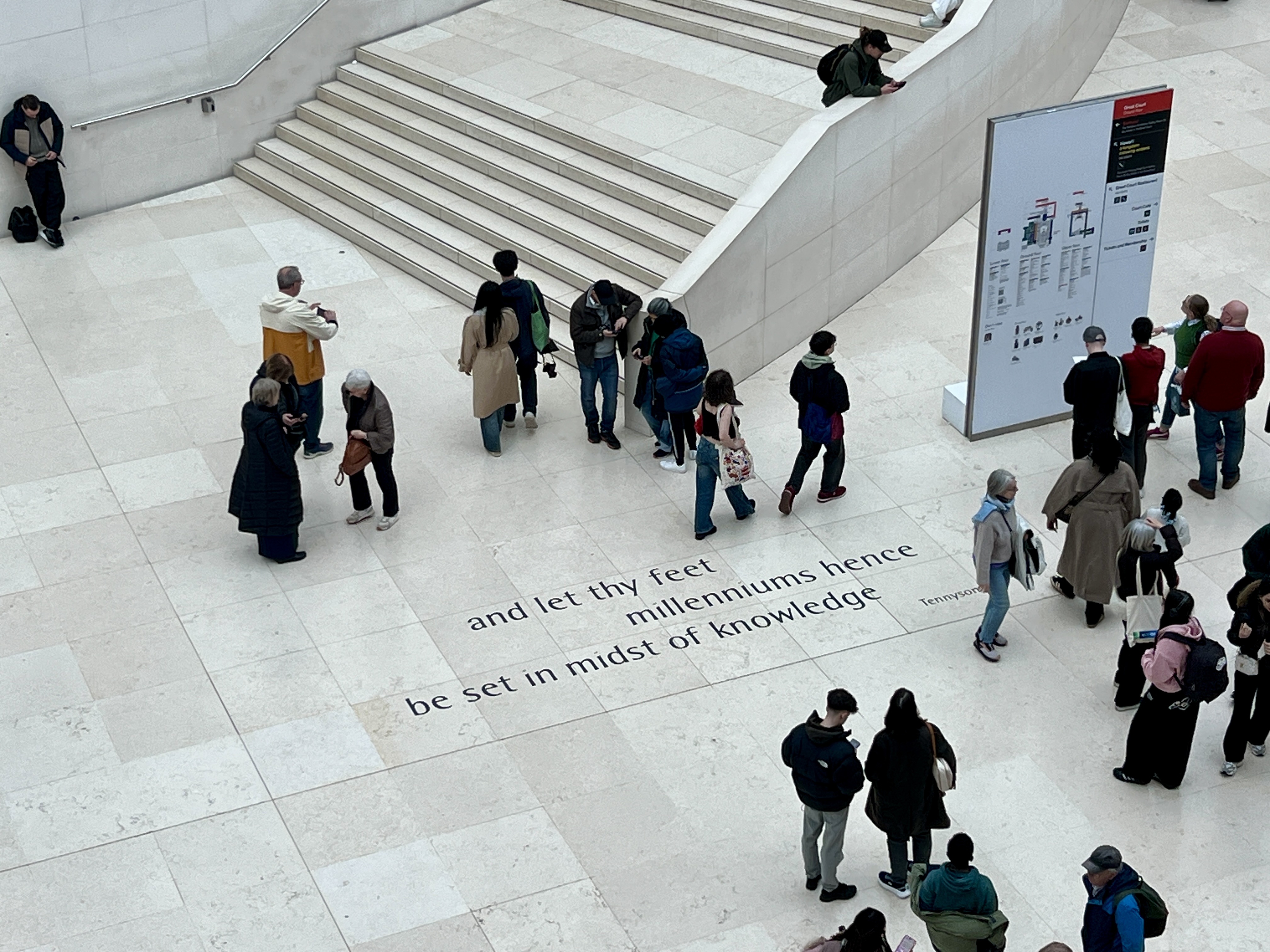
“And let thy feet, millenniums hence, be set in midst of knowledge.”
This verse from Tennyson’s The Two Voices is pressed into the floor of the British Miuseum’s Great Court, opened in 2000 and named after Queen Elizabeth II. The poem wrestles with whether life is worth the effort, and this verse answers that question by pointing feet (actual human feet) toward knowledge. Eight million objects made by people who decided, despite everything, that understanding the world was worth the trouble.
I visited alone. Nobody wanted to come. To be fair, I spent a week dragging my family, via British Rail, through towers and tunnels and palaces.
* * * * * * * * * * * * *
We have been staying with my brother-in-law and his wife, an act of generosity given that I had yet to meet them in person. Sixteen years of being family by marriage across an ocean, and then suddenly there is a kettle on and someone asking how I take my tea. They are even more wonderful in person, which I knew all along.
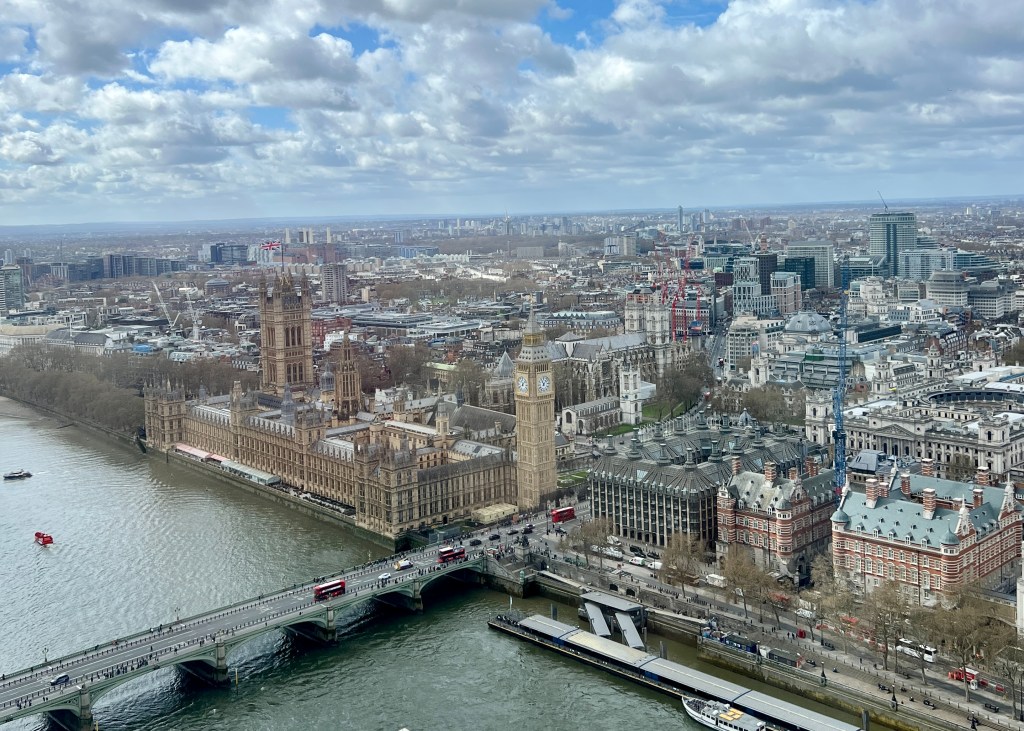
My boys had never been to England, so the first day planned itself. The Eye of London, slow above the Thames, filled my children with awe…for six or seven minutes, they then wanted lunch. Next, the Tower of London, where the Beefeaters and Foot Guards are magnificent…and not to be trifled with. I can neither confirm nor deny whether a US military officer leaned against an ankle-high fence by their posting, prompting the guard’s heels to snap like a gunshot and inform said officer, with the full weight of Tudor ceremonial tradition, that was not acceptable. My boys found this hilarious. I like to think of the ordeal as a cultural exchange.
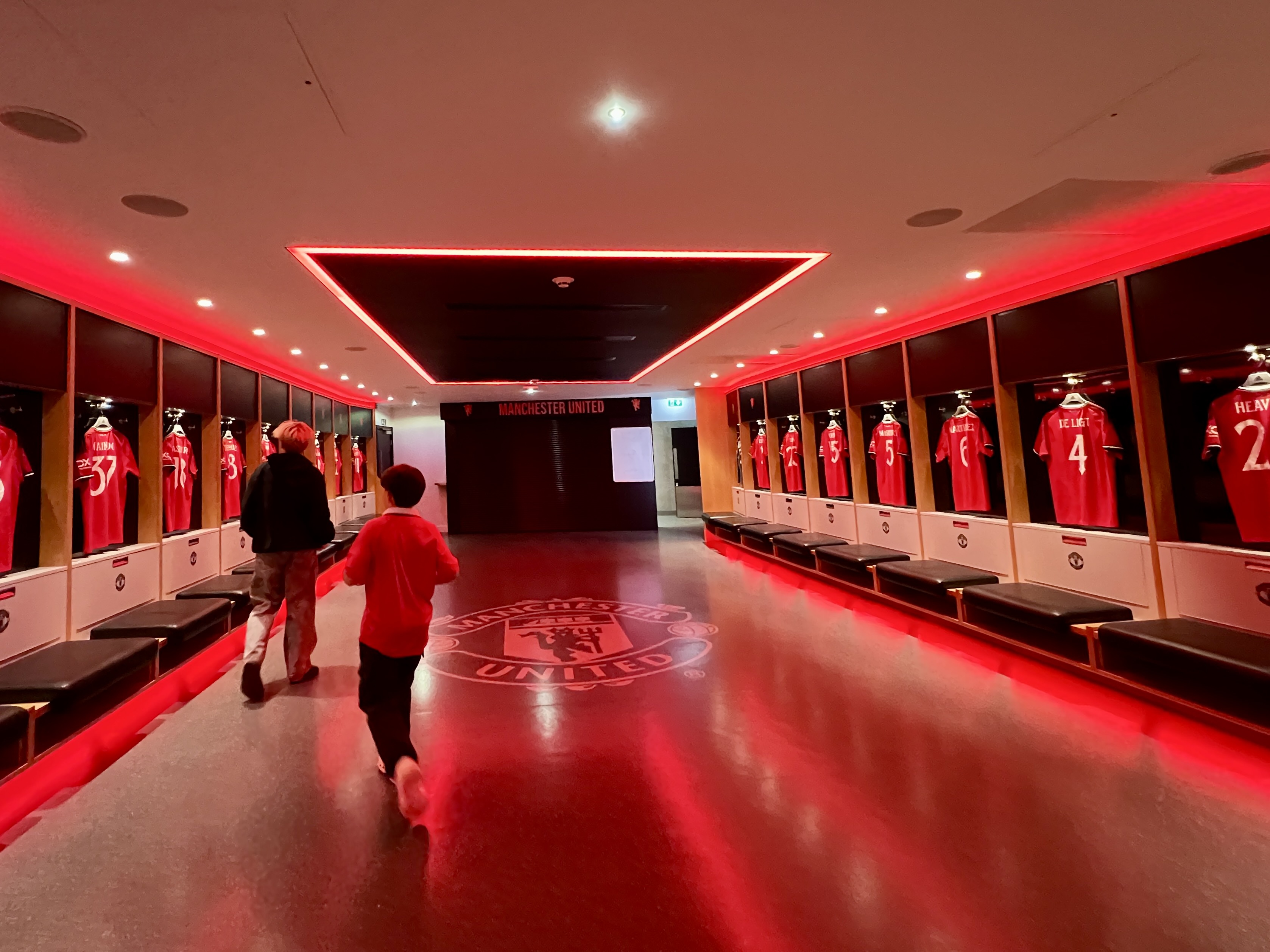
An overnight trip to Manchester via train, for my youngest who dreams of playing football (a/k/a soccer) professionally. Old Trafford stadium one day and Etihad the next. (We are a diplomatically neutral household.) My son walked both tunnels as someone receiving a sacrament. I would give anything to know what was going through his mind in those moments.
Back in London to Buckingham Palace for a behind-the-scenes tour of the east wing. We stood in Centre Room where the Lord Chamberlain lines up the Royal Family before they step out to the balcony. The same balcony where Prince Charles and Princess Diana kissed, where Prince William and Princess Kate kissed after them, where the Queen marked her Jubilees and King Charles stood after his coronation. I watched each of those moments from a television in the United States. And there we were, awestruck and slightly unable to believe it.
That evening I reunited with a friend not seen in 25 years. She looked exactly the same and remembered everything. She visited the US from South Africa right after 9/11. She was just starting her career as an educator, I as a Navy chaplain. Now we both are approaching retirement. Nice bookends, we agreed. Except for the war part.
Sunday, we drove to Essex to meet my nephews for the first time. They live and work in a 370-year-old building that houses their pharmacy, which is as charming as it sounds. One of them knows everyone in town by name and is known warmly in return. He is the kind of person locals organize around, and they want him to run for Parliament. He would make a fine MP, though he hesitates to leave them without a pharmacist.
* * * * * * * * * * * * *
Monday the family claimed the sofa, while I went to the British Museum. After a week of dragging everyone through history, I was not quite finished with it, especially since we still have some left to make.
Every object in that building was crafted by someone with opinions, anxieties, hopes, and a few regrets. The person who etched that Islamic astrolabe was trying to make sense of the sky, which many of us have done in our lives with varying instruments and success. The Lewis Chessmen carver gave the queen a face that barely contains alarm. I wonder, did she see crisis coming, tell everyone, and was not listened to? The Egyptians mummified their cats with an intense love that outlasted their entire civilization.
All of them gone. Every last one.
A significant number of these eight million objects did not arrive here voluntarily. The British Empire was an efficient collector of other people’s cultural inheritance — the Rosetta Stone among them, taken from Egypt in 1801 — and, reasonably so, Egypt, Ghana, Greece, and Nigeria still are a few countries asking for their things back.
What stays with me is the queue outside. Hundreds of people without advance tickets, standing in the cold for hours, just to get in. Nobody made them. They just came, the way people have always come to places that hold the story of us.
The news lately would have us believe we are done with each other. The queue outside the British Museum suggests otherwise.
* * * * * * * * * * * * *
I will mark this Maundy Thursday at Westminster Abbey tonight for services. About 2,000 years ago, Jesus washed his disciples’ feet. What an image: a teacher on his knees before the people he loved, on the night everything was about to fall apart.
While everything feels like it is falling apart in real time, I have been watching people show up for each other all week, in ways large and small. In their hospitality and dreaming. In their staying and remembering. In their standing in the cold just to learn something about who we are.
Tennyson was right. It is worth the effort.
 Captain Reverend Mother
Leave a comment