I felt disgust. Pure disgust. After finishing my Spirit in the Loop piece on the Geneva Conventions and staring at that photo from the Solferino ossuary, my stomach turned. The image of stacked skulls and heaped bones would not leave me alone.
We keep doing this to one another. Throughout our human history, we choose cruelty.
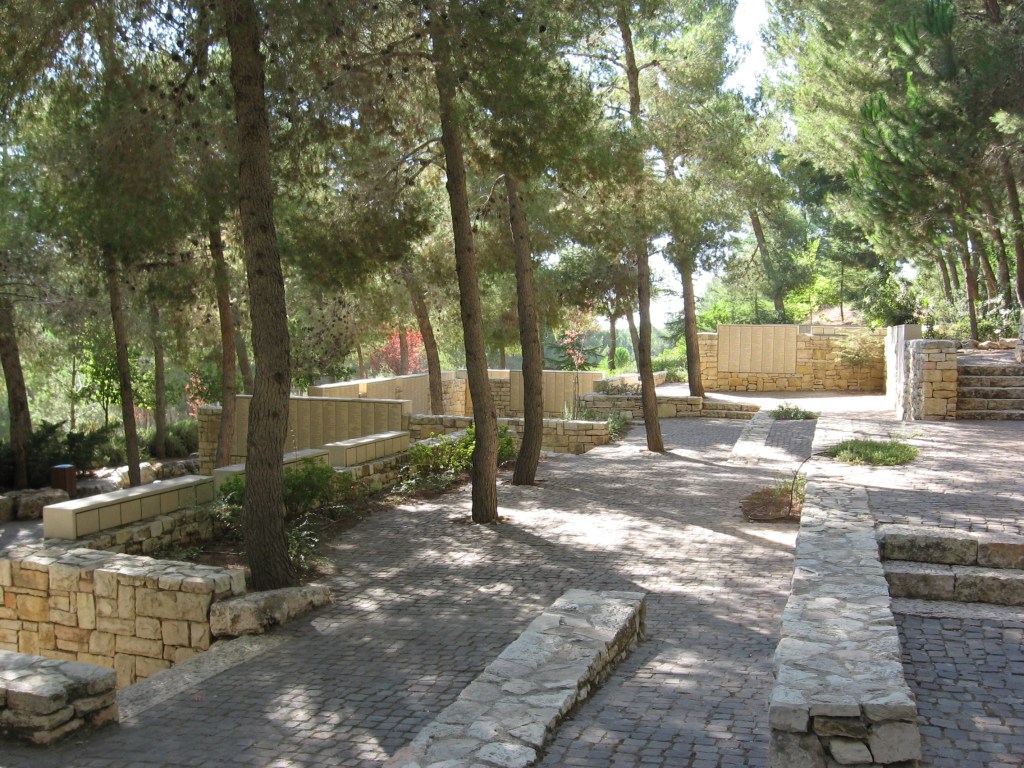
The same sickness hit me at Yad Vashem, shuffling through room after room of orchestrated evil until the museum finally released me into Jerusalem’s blinding sun. I stumbled out, squinting, and planted a tree at the Garden of the Righteous. Such a small act against such massive darkness.
My stomach turned again at the Smithsonian’s African American History Museum. I only managed the ground floor. The weight of slavery’s truth left no air in my lungs. I went to the front desk and asked if they had a chaplain. “I just need someone to sit with in this grief,” I told the docent there. She said they did not, then paused. “Maybe we should.”
The disgust was there twenty-four years ago tomorrow when my friend walked sixteen blocks through Washington, D.C., to find me as the first tower fell. Just the week before, we celebrated her twenty-first birthday. She was ready to take on the world! Now she arrived at my door, and the world as we had known it was gone. She and I are forever yoked by that moment, though we already were, bound by that rare psychic twinning where we know what the other thinks and feels even when miles apart, even when months pass without speaking. We passed the burning Pentagon on our drive to New York, smoke rising against the September night sky. At Tompkins Square Park, people had begun building makeshift memorials. Flowers, photographs, handwritten notes next to lit candles along the fences and sidewalks. Standing there amid fresh grief, I doubled over and sobbed.
Each time that disgust surges through me, it strips away any comfortable illusion that humanity is reliably good.
Einstein is attributed with saying our most important decision is whether or not we believe the universe to be hostile or benevolent. Despite evidence to the contrary, I choose benevolence. (The alternative swallows everything whole.)
Come Sunday at church, Pastor JT was mid-announcements when he mentioned Mrs. Nix, who I sit beside most weeks, was celebrating her seventieth wedding anniversary. Her husband isn’t ablet to make it to church anymore, yet her smile carried the weight of those decades. Seventy years of marriage’s minutiae and moments, from breakfast, children’s missteps, reconciliations, hospital bedsides, and quiet Tuesday mornings…
My chest loosened. Hope gently unclenched my heart thanks to this elderly woman in a mauve pantsuit, carrying her seventy years with unexpected grace. Her endurance brought me hope.
In what feels at times a merciless world, glimpses like these steady my queasy stomach. Living trees on a hill of remembrance, tracing a path of light for goodness to bloom amid deep darkness. Emerging from earthen depths of sorrow comes a history of resilience finally revealed. An ordinary hand extended to another across the decades.
Somehow, love refuses to quit. That persistence brings me hope.
It’s a practice. A choice to plant trees anyway.
Though hope requires more than planting trees. It demands we stay present to both the horror and the healing. Mrs. Nix build seventy years of marriage by facing life with its beauty and brutality, choosing love again each morning, even when the world provided reasons not to.
Hope persists in the space between revulsion and resignation. A stubborn commitment to keep showing up for whatever goodness remains possible.

 Captain Reverend Mother

Leave a comment