
It sneaks up on us.
At first, we attend more funerals than weddings. Then our phone gets quieter. Then Thanksgiving shrinks by one chair, then two. Then Christmas smells different, and no one can find the gravy boat. And then one morning, while refilling the dog’s water bowl or retrieving keys from the refrigerator (where, apparently, we now keep them) it hits us: I am the one who remembers.
I am not the last one left. My brother is still here, and our cousins, and their growing families. We are politically divided, just like the rest of the nation, but we are still a tribe. Even in the middle of that crowd, there is a different kind of grief. The kind that comes when we realize we are the one holding the thread.
We find ourselves seated at the head of the table and do not recall being invited. We were living our life, and suddenly, we are the one who knows how the stories go and are the keeper of the good china.
The irony of all this is I have a terrible memory. I could not memorize music I played. I preach with a full manuscript. The stories of childhood, college, and my years in the military—other people remember them for me, usually more vividly and with better timing. My family and friends are the unofficial keepers of my life. A cheerful committee of fact-checkers with a flair for the dramatic. I take photos to help myself remember (though my children would claim I am curating a full-feature documentary). I am attempting to hold onto the moments that matter. Dementia runs in my family, and I have always thought it wise to be politely suspicious of my own brain.
Still, I remember what matters. And I remember who made me.
My grandparents are long gone. My parents have been gone for a decade plus. All of my aunts and uncles died. And now the people who helped raise me—the chosen family, the holiday people, the ones who made things feel solid—have started leaving, one by one.
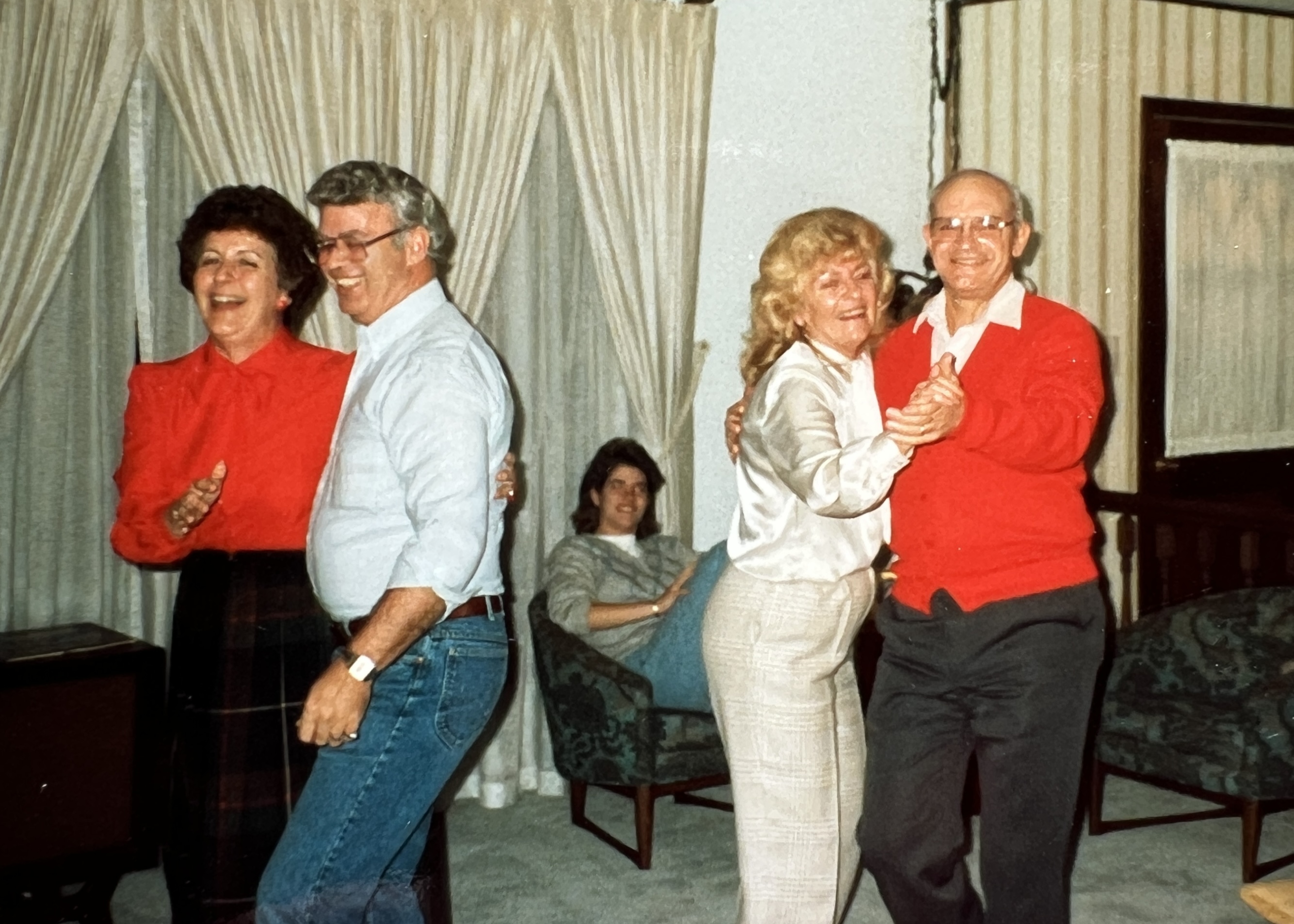
cutting up our living room rug
(c. 1989)
Mrs. Van died during the pandemic. Her husband followed this past October. They were our “in case of emergency” family. My parents named them as guardians if anything ever happened to my brother and me. Every Thanksgiving and Christmas, it was the four of us and the seven Vans…plus Aunt Shelia, who wasn’t really an aunt, she was one of Mr. Van’s cousins who was an only child. The Van’s house smelled like tradition and pies made from scratch, and you always knew where the forks went.
One Thanksgiving, Marcia and I sabotaged the green beans. I hated Mom’s green beans, boiled into submission and salted road slush. Marcia and I poured in extra salt just to make a point. It worked. The beans were so awful my mom gave everyone permission not to eat them. Nearly 50 years later, at the gathering after Mr. Van’s funeral, the story was retold and the whole room burst into laughter. That’s how we know it’s family. Even our culinary crimes are remembered fondly.
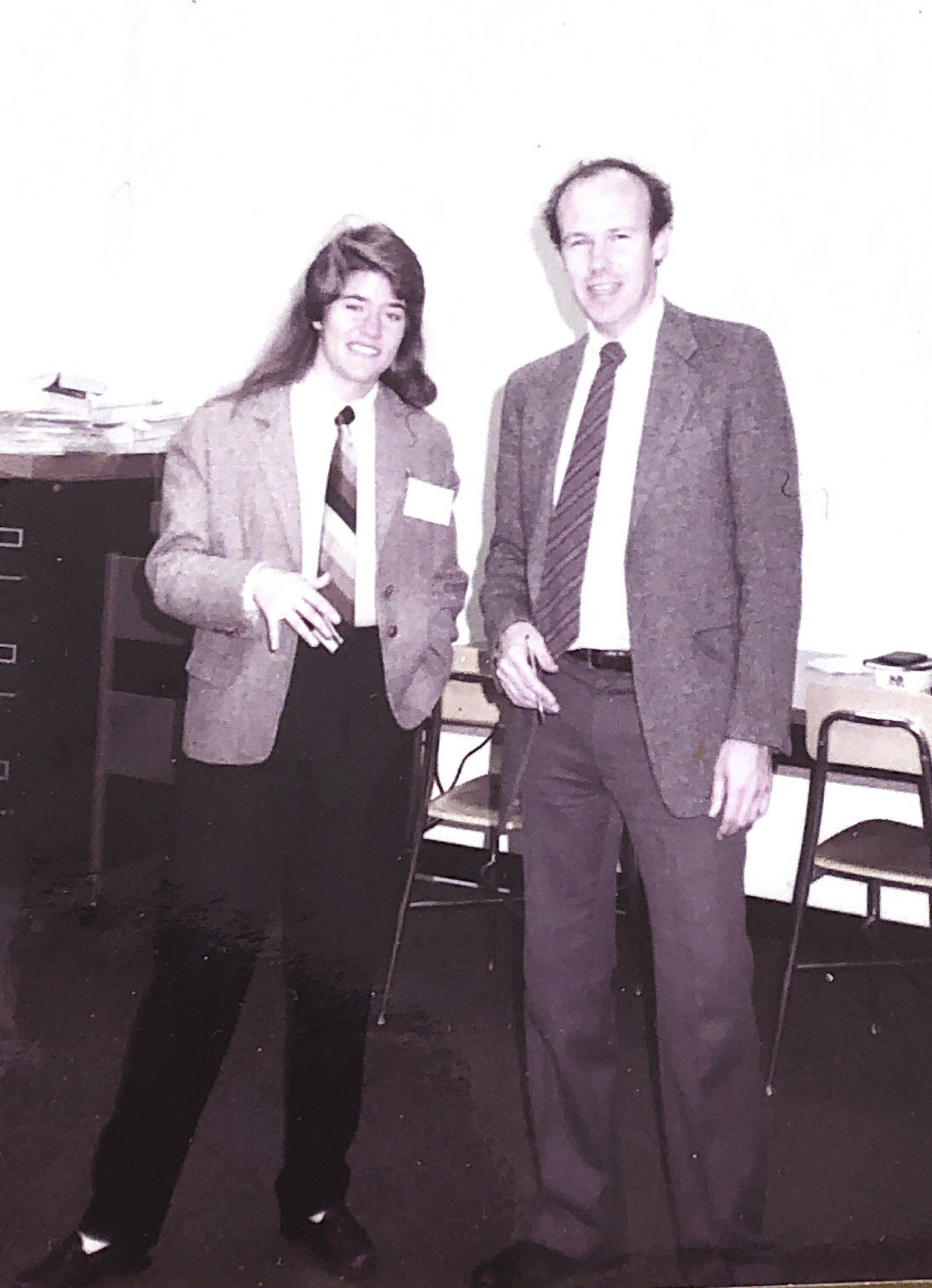
Late last year, my high school English teacher and unintentional life coach died. Mr. P was the teacher who caught me bluffing my way through his class, then offered to meet with me every day for a year to teach me how to read. Not just fake-it reading, but actual comprehension. The kind that landed me at Harvard and, eventually, writing articles on ethics I was once utterly unequipped to understand. He had that deeply inconvenient gift of seeing potential and refusing to look away. I still remember the scratch of his pen in the margin of my paper, correcting my error without correcting my spirit.
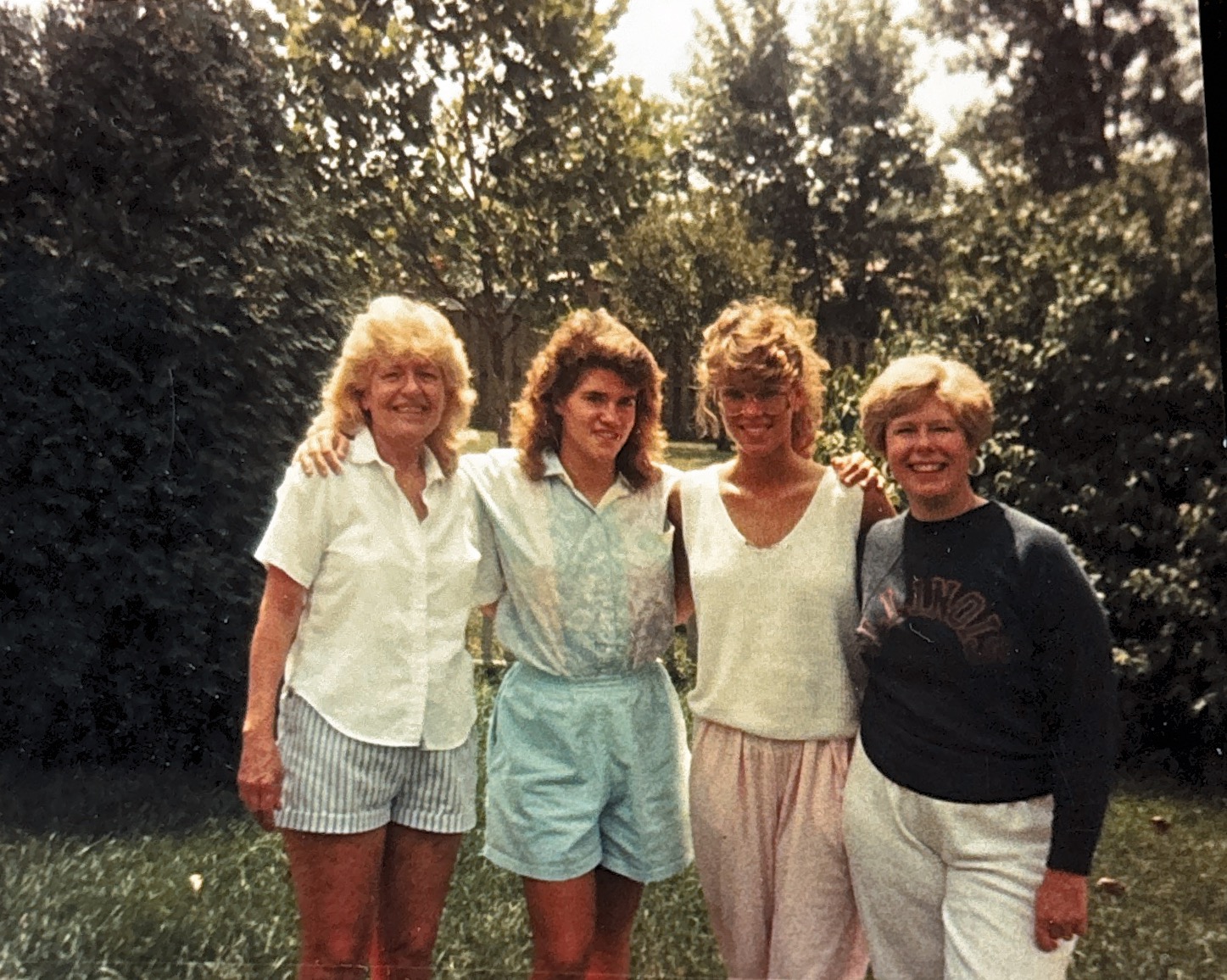
(based on the hair,
clearly some time during the 1980s)
And Mrs. Wey, my first friend’s mom across the street. She is the reason I love musicals. She sang constantly, full Broadway belt while flipping pancakes because, for her, life naturally required overtures. Being around her was like sunlight through a screen door: warm, familiar, slightly theatrical. She gave me my first job dog-sitting, called me CC as if I was some kind of showbiz legend, and made me feel entirely welcome in a house where slippers, show tunes, and mild chaos reigned.
One June afternoon, after Julie’s high school graduation, Mrs. Wey’s brother, Uncle Jim, gave my mom a generous pour. It was the first time I saw Mom tipsy. I was scandalized. Mrs. Wey was cheerful. She just smiled and said, “Tee many martoonis,” then launched into Oklahoma! while serving pigs in blankets. She was a woman who had seen things and knew how to rise above them.
It is a quiet ache. The moment when our story becomes the record. When we speak, and no one is left to correct us. When we notice the memory fading from everyone else’s eyes, and we alone are left to hold it steady.
There are moments when I remember the sound of my mother’s voice calling my name across a crowded room. Or the shape of my father’s signature. Or the way my aunt would draw out “really” with an acquired Southern twang, letting it linger like a compliment as if whatever you just shared was absolutely worth hearing. I remember what it felt like to belong to a generation that had people above it.
Now, there is no one above us. There is no fallback historian. We are it.
People say, “Death is part of life.” Which is true. It is also staggeringly unhelpful. That line does not prepare anyone to be the person who has to explain what gravy consistency should be, or how Grandma folded napkins for Christmas Eve, or if it’s ok to laugh in the middle of the memorial slideshow. (It is. Within reason.)
And yet somehow, we know. Or we fake it convincingly. Same result.
Now I speak in the tones they once used with me: kind, dry, patient, sometimes slightly inappropriate. I remember through repetition, through awkward laughter, through old photographs and church bulletins. Through casseroles and playlists. Through the stubborn grace of just showing up.
This is not nostalgia. It is vocation.
This is what it means to be the one who remembers: fewer elders, deeper roots. The stories do not survive on their own. They live in us, grow through us, and spill out when we least expect them. They live in the way we welcome people, the way we cry during commercials, the way we cut pie with a butter knife because the proper one is missing again.
The people I loved are gone. The people I love are here. And I am still becoming the person they believed I could be.
That is what it means to carry the story forward.
We are not the last.
We are simply the next.
 Captain Reverend Mother
Leave a comment